The Bus to Monschau
An Eifel town folded into the valley of the Rur — slate, timber, and water — reached by train and a bus that runs every half hour.
The short version
- Take a train from Köln Hbf to Aachen (35–50 minutes), then the SB63 express bus into Monschau — the Eifel buses run every half hour and take about an hour; plan the legs at avv.de.
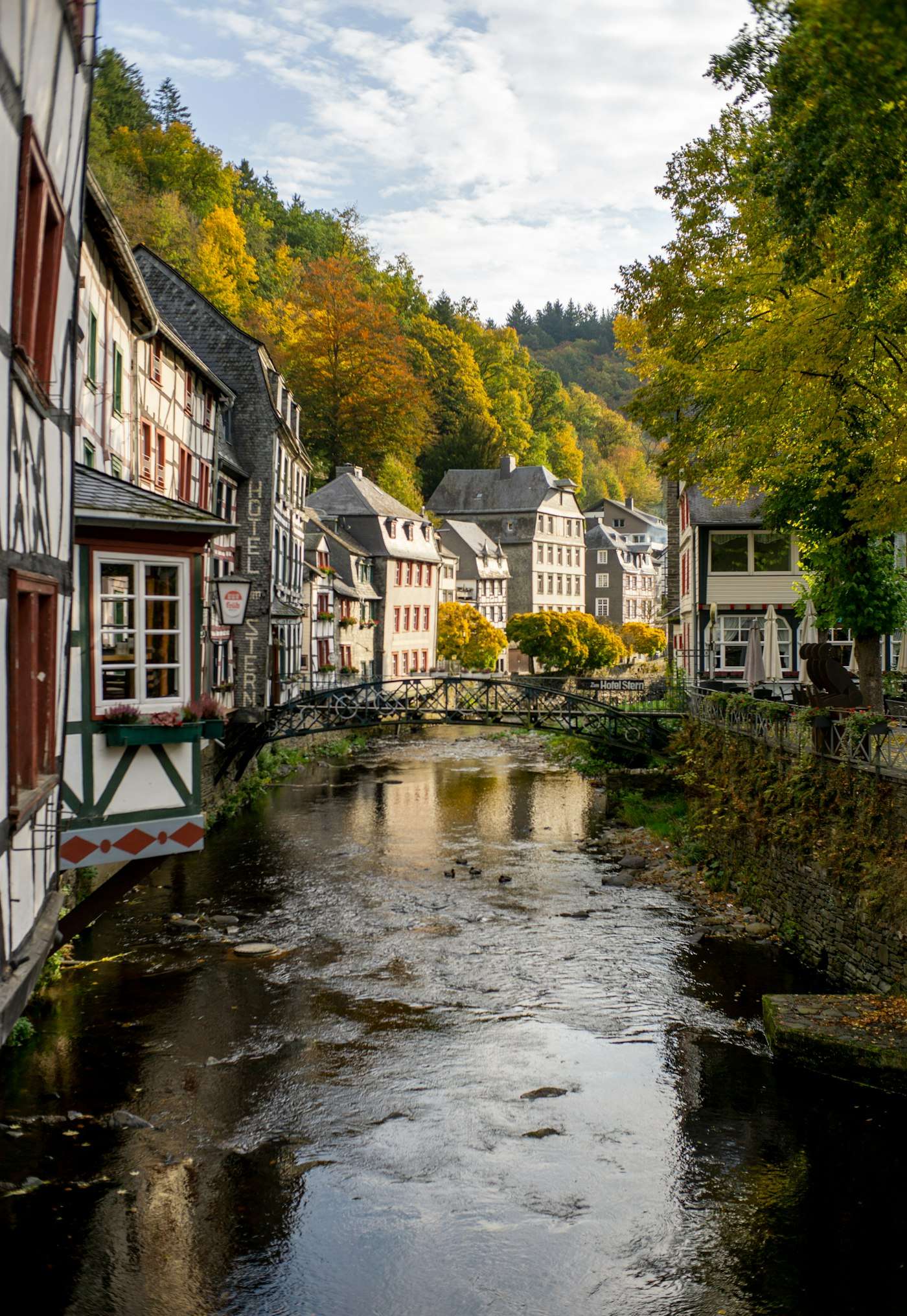
- The town is the sight: half-timbered and slate-hung houses stacked along the River Rur where it cuts through the Eifel hills, essentially unchanged since the cloth-trade money stopped two centuries ago.
- The Rotes Haus, a cloth merchant’s 1760s mansion, keeps its original interiors and a freestanding oak spiral staircase that is the town’s indoor treasure.
- The Historische Senfmühle has ground mustard since 1882 and still runs — tours, tastings, and jars to carry home; details at senfmuehle.de.
- Climb five minutes above the rooftops to the Panorama viewpoint or the castle for the photograph everyone came for, then reward the legs with Eifel cake in a riverside café.

Getting there
From Köln Hauptbahnhof, trains reach Aachen in 35 to 50 minutes depending on service. From Aachen’s bus station or Hauptbahnhof stops, the SB63 express bus runs every half hour into the Eifel and lands in Monschau in about an hour; the whole journey is covered by regional Deutschland-Ticket-style fares. Drivers take the A4 and B258 in about an hour and a half — but parking on summer weekends tests patience, and the bus drops you closer.
The day
Walk down into the town — Monschau is a bowl, and every arrival descends. The lanes along the Rur do the work: timber and slate houses shoulder to shoulder over the water, the improbable eight-storey Haus Troistorff, and bridges every hundred meters offering a better angle than the last. Tour the Rotes Haus for the interiors and that staircase, then the mustard mill on the edge of town — the 1882 machinery still grinds, the tastings are cheerful, and the Monschauer Senf jars travel well. The glassworks on the hill blows and sells its own. Climb to the Panorama or the castle youth-hostel walls for the roofscape shot, then take coffee and cake by the river. In December the whole bowl becomes one of Germany’s prettier Christmas markets — smaller and saner than Cologne’s, and worth the connection on its own.
When to go
May through October for the full café-by-the-river version; October adds fire-colored woods on the gorge rims. December is the other season — the Christmas market weekends fill the buses and the lanes, so go midweek if you can. Deep winter between the markets is quiet and stark, with shorter opening hours; check the mill and Rotes Haus days before a January trip.
Frequently Asked Questions
How do you get to Monschau without a car?
Train from Cologne to Aachen, 35–50 minutes, then the SB63 express bus into Monschau, about an hour, running every half hour. The connection is the trip’s only trick — check times both ways.
What is Monschau known for?
A remarkably preserved half-timbered old town in the Rur gorge, built on 18th-century cloth wealth — plus a working 1882 mustard mill, the Rotes Haus merchant mansion, and one of the region’s best small Christmas markets.
Is Monschau walkable?
Entirely, but vertically: the town sits in a bowl, and lanes climb steeply from the river. Good shoes matter; the reward is that the best viewpoints are ten minutes’ puff above the rooftops.
What should you buy or taste?
Monschauer mustard from the Senfmühle — the mill runs tastings and sells every variety — plus Eifel cakes in the riverside cafés and glass from the local works. The Dreiländereck beers travel less well than the jars.
When is the Christmas market?
Advent weekends in December, threaded through the whole old town. It is one of the Eifel’s biggest draws — beautiful, busy, and best visited early in the day or midweek. Buses fill; leave margin on the return connection.