Aachen from Cologne: The Short Train, Charlemagne’s Chapel, and the Throne Behind the Tour
Under an hour west, the chapel Charlemagne built still holds his marble throne — Germany’s first World Heritage site, thirty royal coronations deep. The throne shows only on the tour, and the gingerbread has rules.
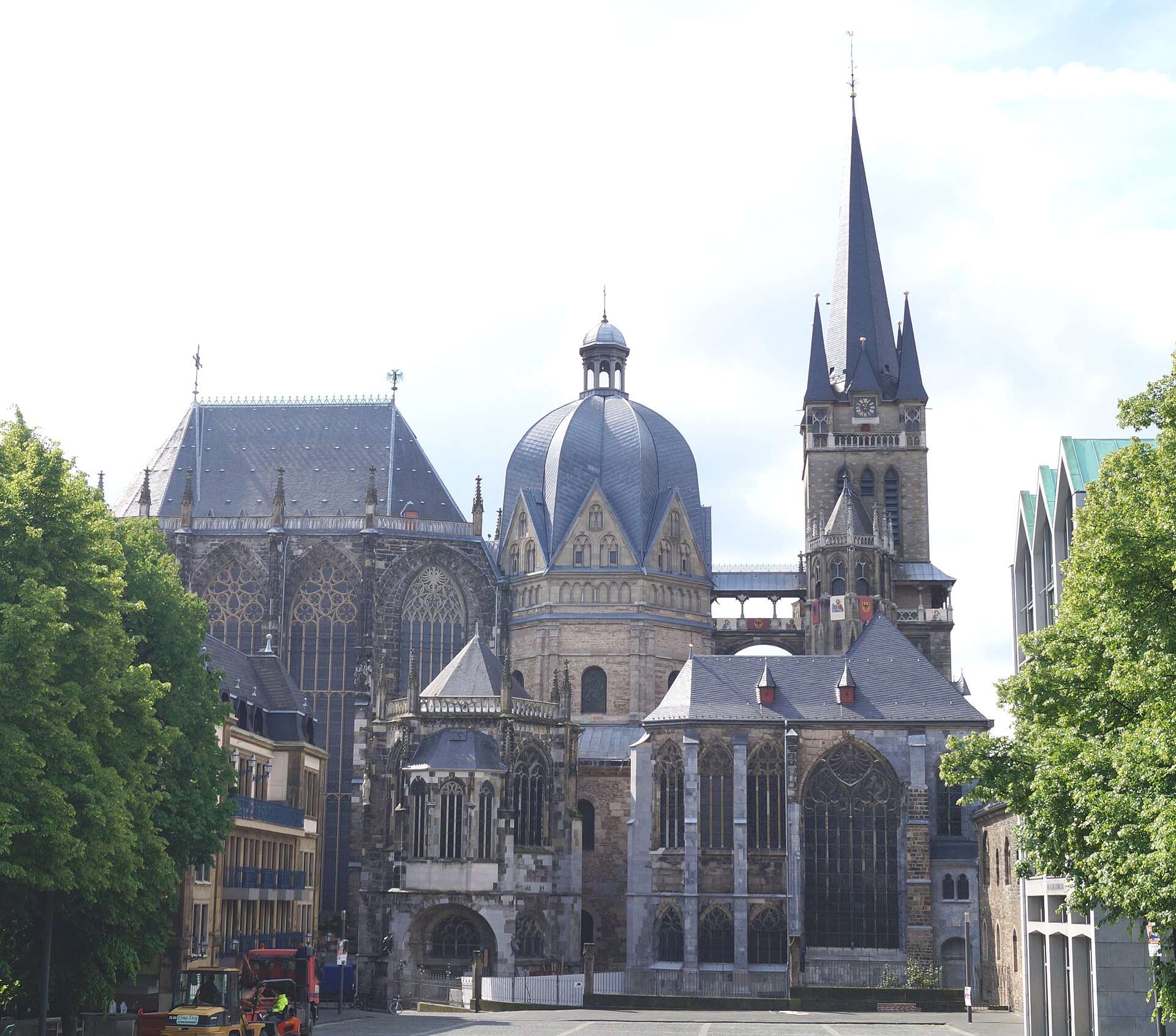
The short version
- RE and ICE services run Cologne to Aachen every few minutes-to-half-hour in 35–50 minutes on ordinary fares — times at bahn.de; the cathedral stands ten minutes’ walk from the station.
- Charlemagne raised the Palatine Chapel around 800 as his capital’s heart — the octagon’s tiered arches and mosaics still center the cathedral that grew around it, and the ensemble was Germany’s first UNESCO listing in 1978.
- Thirty German kings were crowned here across six centuries (936–1531), seated on the plain marble throne in the upper gallery — which visitors reach only on the guided tour, per the alarm’s booking rule.
- The cathedral treasury ranks among Europe’s greatest: the Cross of Lothair, the Bust of Charlemagne holding his own skullcap, and reliquary gold at imperial density — the modest ticket outperforms museums ten times its price; details at aachenerdom.de.
- Printen — Aachen’s spiced gingerbread, protected by name — sell from historic bakeries in hard, soft, and chocolate-armored formats; the alarm’s bakery-not-station rule applies with force.
- The Elisenbrunnen’s hot sulfur springs (the smell is the authenticity), the Rathaus built on Charlemagne’s palace hall, and the bus ride to the Dreiländereck — the three-country point where Germany, Belgium, and the Netherlands meet — round the day’s range.

Getting there
The Cologne–Aachen corridor runs at commuter density; turn up and board, no planning beyond the alarm’s tour-booking thought. The station-to-cathedral walk crosses the spa town’s compact grid. The Dreiländereck extension takes bus 350 toward Vaals at the Dutch border plus a short climb — an hour’s round-trip commitment for the stand-in-three-countries photo and the Vaalserberg’s modest summit, best slotted after the cathedral’s demands are met.
The visit
Cathedral first, in its intended order: the octagon from below — the Barbarossa chandelier ringing the space Charlemagne walked — then the choir hall’s glass and the shrine that holds him. The guided tour (booked or requested on arrival, per the alarm) climbs to the throne: six marble slabs of deliberate plainness that seated thirty coronations, more affecting for its bareness than any gilded chair. The treasury follows while the imperial register holds. Lunch runs Rhenish-hearty around the Markt; the Rathaus’ coronation hall (frescoed, visitable) extends the theme upstairs from Charlemagne’s palace foundations. The afternoon takes Printen procurement at a proper house, the Elisenbrunnen’s sulfurous fountain ritual, and either the Couven quarter’s boutiques or the three-country bus per appetite. The constant trains make the return an afterthought.
When to go
Aachen works year-round — the cathedral interior ignores weather and the town’s spa bones expect it. Advent stages one of Germany’s better Christmas markets under the cathedral’s shoulder, Printen at peak trade. The Karlspreis ceremonies (May) and pilgrimage years bring their own crowd rhythms. Summer adds café terraces; winter adds the springs’ steam to the cold air. The tour’s timetable — not the season — is the one variable worth checking before boarding, per the alarm.
Frequently Asked Questions
Why is the throne so plain?
Deliberately — marble slabs, possibly reused ancient stone, asserting continuity with Rome rather than displaying wealth. Kings climbed the same worn steps for six centuries to sit in Charlemagne’s designated seat. The plainness is the statement, and standing before it lands accordingly.
Is Charlemagne actually buried there?
His remains rest in the golden Karlsschrein in the choir — moved, examined, and re-enshrined across the centuries, with the science broadly agreeing on the bones. The bust in the treasury holds his skullcap; the cathedral holds the rest of the argument.
Aachen or Brühl as the Cologne side trip?
Brühl (documented on this network) for rococo palaces in an easy half-day; Aachen for imperial weight and a fuller town. Architecture of power, two flavors — Aachen is the deeper draught.
What are the Printen rules exactly?
Protected origin: real Printen come from Aachen’s bakeries, in Kräuter- (hard, traditional), Weich- (soft), and chocolate-covered lines. The historic houses near the cathedral sell tins that survive the journey home. Station-shop versions violate the spirit and the alarm.
Is the three-country point worth the detour?
As a cheerful geographic novelty with a tower and woods walk — yes, for an hour, kids especially. The labyrinth and viewing tower charge modestly; standing in three countries at once remains free and quietly delightful.