Cologne Day Tours
I’m Serious Day Tour Man AI, your day trip expert. Ask me anything — where to go, how to get there, and what’s actually worth your day.
Cologne sits in the middle of a day-trip wheel that the trains built: Charlemagne’s chapel is forty minutes west, Beethoven’s birthplace twenty minutes south, a UNESCO rococo palace fifteen minutes down the S-Bahn, and the castle-stacked Rhine Gorge an hour and a half upstream.
The city itself runs on two verticals — the cathedral’s towers and the Kölsch glass, which is small, cylindrical, and refilled by law of custom until you signal surrender. Both systems are explained below, along with the one rivalry (Düsseldorf, twenty-five minutes north) that structures local identity more than any monument.
Here’s what’s worth a day, with real times and honest trade-offs.
Popular Day Trips
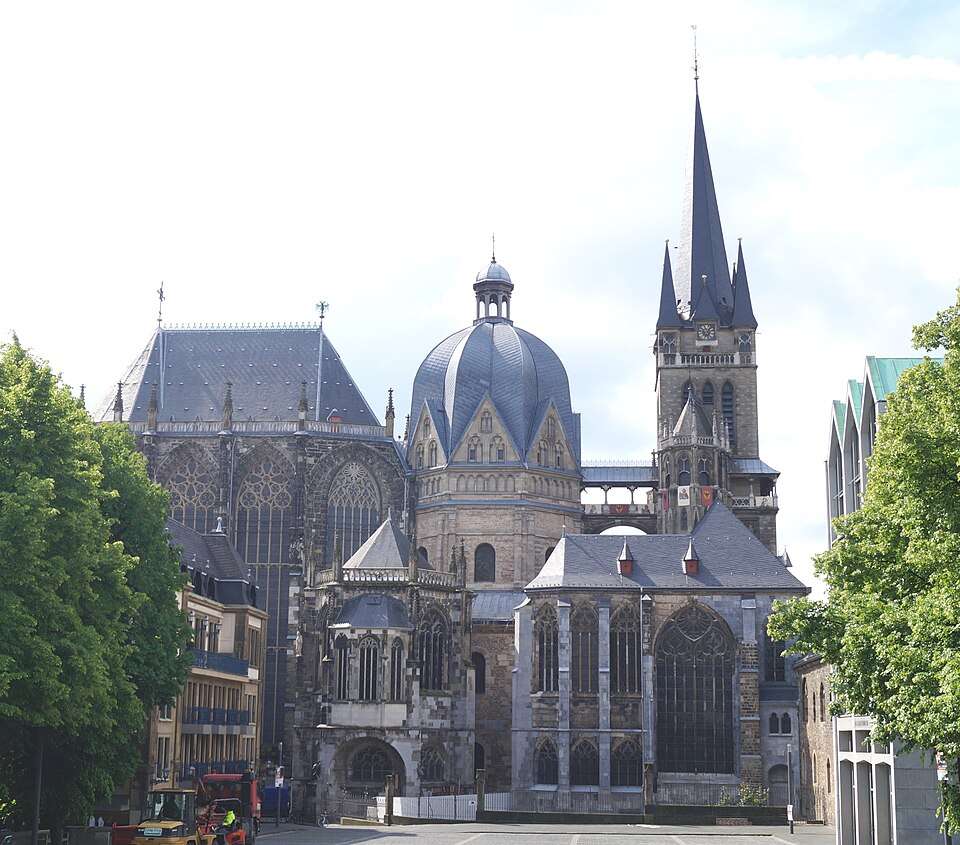
Aachen
The Short Train, Charlemagne’s Chapel
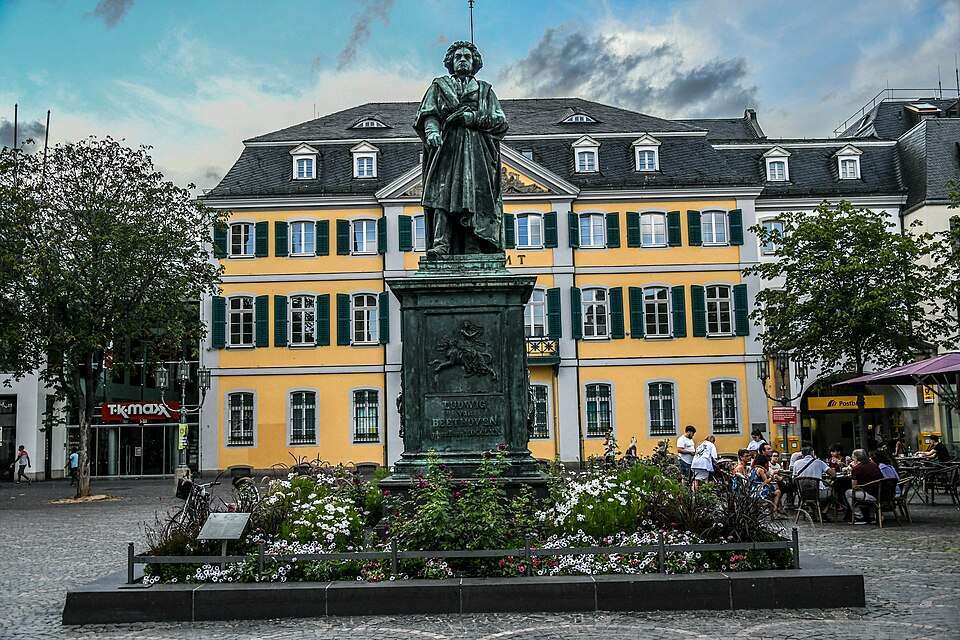
Bonn
Beethoven’s Birth House, a Capital That Handed It Back
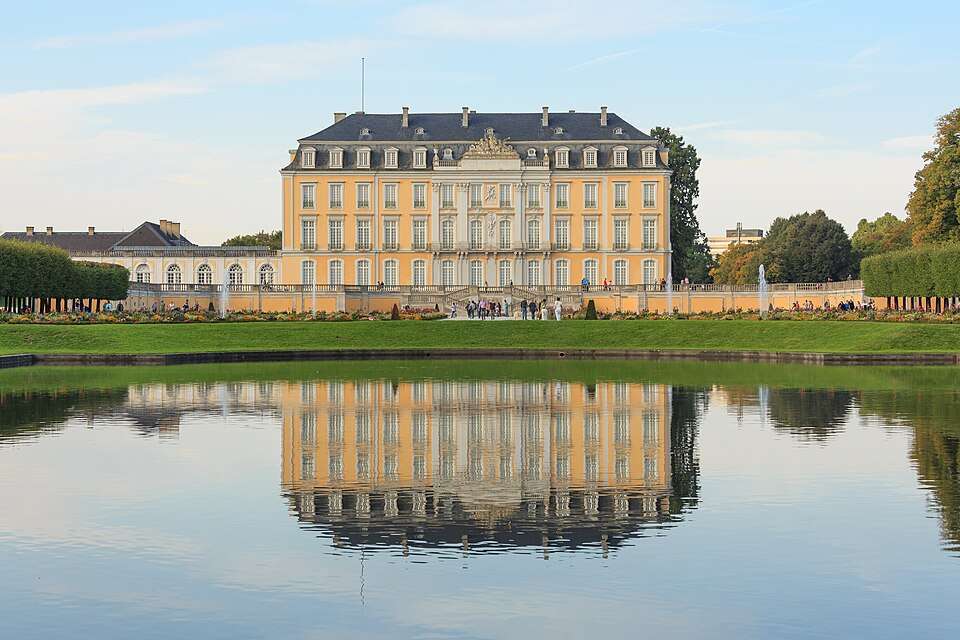
Brühl
The 15-Minute Train, Augustusburg’s Staircase
Aachen — Charlemagne’s Chapel
Forty minutes west by fast train, Aachen holds the building that started German history: Charlemagne’s Palatine Chapel, built around 796, the octagon where thirty-one Holy Roman kings were crowned across six centuries. It anchors the cathedral — Germany’s first UNESCO site — and the golden shrine behind the altar holds Charlemagne himself. Take the guided tour or the upper-gallery access to see the marble throne; the ground-floor visit alone misses the point of the room.
The circuit around it: the cathedral treasury (the Cross of Lothair and the bust reliquary of Charlemagne rank with any church treasure in Europe), the fourteenth-century town hall built on the palace foundations, and the Elisenbrunnen colonnade where the town’s sulfurous hot springs — the reason the Romans and Charlemagne settled here — still run drinkable and smell exactly as advertised.
The rituals: Printen, the town’s hard spiced gingerbread, from Nobis or Klein at the source; the Carolus Thermen baths for the modern version of the spa the town was named for; and the three-country point at Vaals, twenty minutes on, where Germany, Belgium, and the Netherlands meet on a hilltop for the novelty photo. A compact, first-rate day.
Read the full Aachen day-trip page.
Bonn — Beethoven and the Republic
Twenty minutes south, Bonn stacks two stories: the composer and the capital. The Beethoven-Haus, the pink townhouse where he was born in 1770, runs the world’s premier Beethoven collection — the ear trumpets and the conversation notebooks land hardest — and books timed entry online in season. The Münster basilica and the market square’s baroque town hall carry the old-town half hour.
The capital layer is the underrated half: Bonn served as West Germany’s capital for fifty years, and the Haus der Geschichte — the museum of postwar German history — is free, superb, and the single best explainer of divided-and-reunified Germany anywhere; Adenauer’s Mercedes and the original Bundestag seats are the props. The Museum Mile adds the Bundeskunsthalle’s rotating blockbusters.
The seasonal ambush: for two to three weeks around mid-April, the Heerstraße’s cherry-blossom tunnel turns the old town pink and briefly world-famous — time it or avoid it knowingly. The Rhine promenade and a KD boat toward Königswinter, with the Drachenfels rack railway up to the ruin the Rhine romantics painted, extend the day into the Siebengebirge. Gentle, near, and easily paired.
Read the full Bonn day-trip page.
The Rhine Gorge — Castles at Density
Ninety minutes south, the UNESCO Upper Middle Rhine Valley begins: the sixty-five-kilometer gorge between Koblenz and Bingen where castles stand at a density found nowhere else on earth — roughly one per two kilometers — above terraced Riesling vineyards and the Loreley rock.
The classic format is train-plus-boat — rail to Boppard or St. Goar, then a scheduled boat for the middle stretch, because the gorge is built to be seen from the water and the full-length cruise is slower than it sounds. Marksburg, above Braubach, is the one castle never destroyed and never rebuilt — the tour walks a genuine medieval interior rather than a nineteenth-century fantasy. Rheinfels at St. Goar supplies the vast ruin, and the Loreley plateau supplies the view and the legend, with the statue at the spit for the photo.
Three rules apply: check boat schedules against train times before committing (the frequencies drop outside summer), the left-bank and right-bank rail lines serve different towns, and the Riesling tasting goes to whoever isn’t driving — which is the argument for doing the whole day by rail and boat. October’s vineyards run gold; December mostly sleeps.
Brühl — The Rococo Fifteen Minutes Away
Fifteen minutes south by S-Bahn, Brühl holds the day-trip-to-effort ratio champion: the UNESCO-listed Augustusburg Palace, the archbishop-elector’s rococo statement whose Balthasar Neumann staircase — a cascade of marble, stucco, and ceiling fresco — is among the finest single rooms in Germany. Visits run by guided tour; check days and times ahead, since state-palace schedules keep German hours and Mondays are traditionally dark.
Falkenlust, the small hunting lodge across the park, is the second half of the inscription: an intimate rococo jewel built for falconry parties, reached by a flat walk through the palace gardens — the French parterre restored to its 1730s geometry. The pair together run two to three unhurried hours.
This is the half day that fills the arrival or departure afternoon perfectly, and it pairs with Bonn on the same rail line for a full baroque-to-Beethoven day. Families know Brühl for a different reason — Phantasialand, the theme park at the town’s edge, is one of Germany’s best and books its slots online.
Read the full Brühl day-trip page.
Monschau & the Eifel — The Half-Timber Deep Cut
An hour and a quarter southwest, Monschau is the storybook entry: a half-timbered town folded into the narrow Rur valley so completely that the viewpoint above shows a village apparently poured into a crack in the hills. The circuit: the slate-and-timber lanes, the Rotes Haus — the cloth-merchant’s house whose freestanding oak staircase is the interior surprise — the glassblowers, and the mustard mill running the local condiment economy since 1882. December’s Christmas market is the town at maximum storybook, with crowds to match.
The Eifel National Park around it adds the wild half: the Urft and Rur reservoirs, the Wilde Kermeter’s accessible viewpoint trails, and Vogelsang — the former Nazi training complex turned documentation center, visited in the sober register such places require. The Eifel’s volcanic south, with its crater-lake maars, is a car day rather than this one.
The logistics: the train-plus-bus route works but demands schedule reading; the drive is simpler. Monschau is a half-day town, the park makes it a full day, and the combination is the region’s best answer to “somewhere that doesn’t feel like a city.”
The Dom, the Kölsch Rules & Cologne Itself
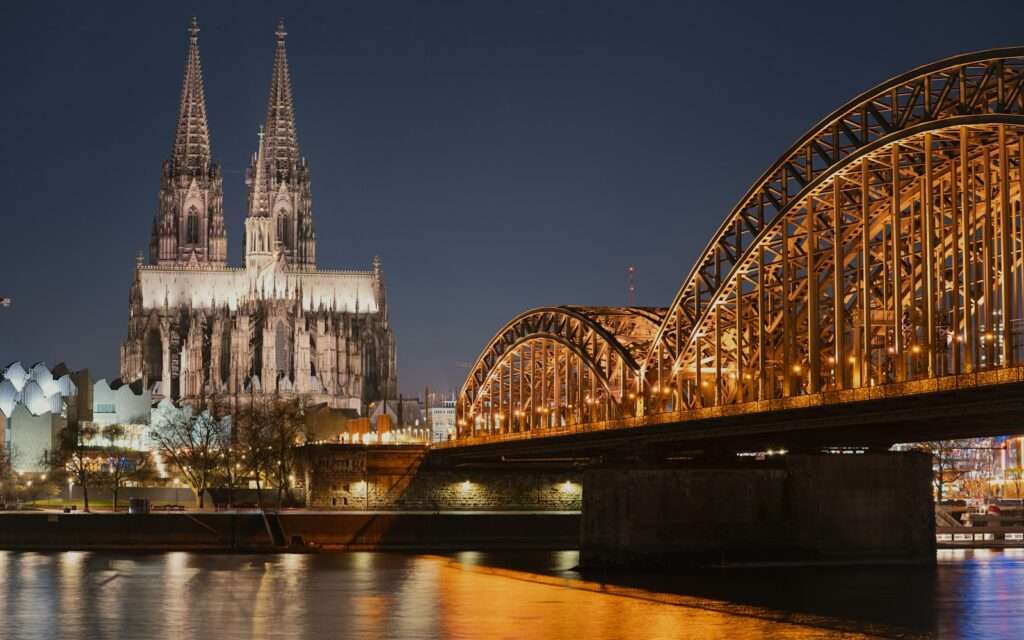
The cathedral first: the Dom is the city’s reason, and current entry arrangements are worth checking on the official site before you go. The tower climb is the ticketed event, sold on-site only (no online booking), 533 steps up the south tower with no lift, past the bell chamber to the 97-meter platform. Allow 30 to 45 minutes and skip it with knee trouble; the treasury ticket is the ground-level alternative. Weekday mornings before 10 beat the tour-group tide, and the west facade at dusk from the station steps is the free spectacle.
The Kölsch rules, because the beer is a system: it arrives in 0.2-liter Stangen, the Köbes (waiter) replaces your empty without being asked and marks your coaster, and the glass keeps coming until you put the coaster on top — that’s the off switch. Früh, Päffgen, and Gaffel run the classic brewery halls; ordering an Alt (Düsseldorf’s beer) is the local joke you make exactly once.
The rest: Museum Ludwig for the Picasso-and-pop heavyweight collection beside the Dom, the Wallraf-Richartz for the old masters, and the EL-DE Haus — the Gestapo’s Cologne headquarters with prisoners’ wall inscriptions preserved — visited in the sober register and paired with nothing cheerful. The Chocolate Museum’s fountain covers the family hour, the Rhine promenade and Hohenzollern Bridge’s love locks cover the stroll, and the Belgian Quarter covers the evening. Season math: carnival (the week before Lent) is the city at full tilt — attend deliberately in costume or schedule around it entirely, because neutrality is not an option locally; December runs Germany’s densest Christmas-market cluster; and summer belongs to the beer gardens and the Rhine lawns.
Frequently Asked Questions
What’s the best day trip from Cologne?
Aachen — forty minutes to Charlemagne’s octagon chapel, the imperial treasury, and Printen gingerbread. Take the tour for the upper gallery and the marble throne; the ground floor alone undersells the room.
How do you climb the Cologne Cathedral tower?
Tickets are sold on-site only at the south-side entrance — no online booking — for the 533-step climb past the bell chamber to the 97-meter platform. No lift exists; allow 30–45 minutes and go weekday mornings.
Is the Rhine Gorge doable as a day trip from Cologne?
Yes — ninety minutes to the castle-dense UNESCO stretch. The standard format is train to Boppard or St. Goar plus a boat for the middle section, with Marksburg as the one genuinely medieval interior. Check boat-and-train schedules before committing.
What are the Kölsch rules?
Small 0.2-liter glasses, automatically refilled; the Köbes marks your coaster per round, and the coaster placed on top of the glass is the stop signal. Ordering Düsseldorf’s Alt in a Cologne brewery hall is a joke with a shelf life of one.
Is Brühl worth the trip?
At fifteen S-Bahn minutes, emphatically — the UNESCO Augustusburg palace’s Neumann staircase and the Falkenlust lodge make an effortless half day. Check tour times ahead; state palaces keep German hours.